Positioning for Success
Toileting Strategies for Children with Physical Disabilities
| August 2026ARTICLE SUMMARY
Every child’s toileting journey is different, and children with physical disabilities often benefit from additional support. By combining proper positioning, individualized routines, and adaptive strategies, caregivers can help build comfort, confidence, and greater independence with toileting.
- Recognize readiness based on cognitive and communication skills—not just physical independence.
- Proper positioning supports comfort, pelvic floor relaxation, and more effective bladder and bowel emptying.
- Use scheduled toileting, visual supports, and data tracking to establish consistent routines.
- Reinforce successful toileting with immediate, positive encouragement to build confidence and participation.
- Consistency between home, school, and therapy settings can strengthen toileting success.
- Adaptive special needs potty training equipment, such as supportive toileting systems, can improve positioning, reduce caregiver burden, and increase participation.
 Achieving independence in activities of daily living (ADL) is an important milestone in any child’s development. Toileting is an important activity of daily living that promotes independence, autonomy, and participation while also reducing caregiver burden. However, achieving toileting independence in this skill can be hard for any child to master.
Children with physical disabilities often face barriers beyond learning the potty routine. Factors such as motor impairments, postural instability, spasticity, muscle weakness, and transfer challenges can impact a child's success. Successful toileting for children with physical disabilities requires both behavioral and physical support for long-term success.
Recognizing Toileting Readiness
Traditional toileting readiness signs may not apply to every child with a physical disability. Cognitive readiness and motivation often contribute more to toileting success than physical independence alone. Potential readiness signs include:
- awareness of wetness
- predictable voiding patterns
- attempts to communicate toileting needs
Positioning is The Foundation of Successful Toileting
Once readiness signs are present, establishing an optimal toileting environment becomes the next important step in successful potty training.
One of the most important factors caregivers can influence in the process of toilet training is positioning. Proper positioning is essential for effective bowel emptying in children with and without disabilities.1 Unsupported sitting may increase postural effort and reduce a child’s ability to relax the necessary muscles for effective elimination. Proper and stable positioning can improve a child’s comfort and toileting efficiency.2
To successfully void urine or stool, a child must be able to relax the pelvic floor while maintaining sufficient postural stability.3 Children with cerebral palsy frequently experience challenges with trunk control, muscle tone, and balance, which can make unsupported toileting difficult.
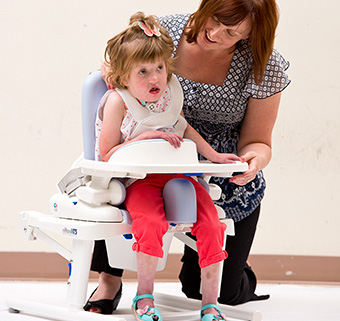
Providing adequate support to the pelvis, trunk, and feet can reduce the physical demands of maintaining posture and improve participation in toileting routines.2
Effective bladder emptying requires coordinated relaxation of the pelvic floor muscles, making positioning an important consideration during toileting.3 Ideally, the child is positioned with support at the pelvis, trunk, and feet to promote stability and reduce the effort required to maintain an upright posture while seated on the toilet.4
Building a Successful Toileting Routine
Children with cerebral palsy often experience delayed acquisition of bladder and bowel control, which highlights the importance of individualized toileting training for special needs children.5 Evidence-based toileting programs frequently incorporate scheduled toileting opportunities, data collection, visual supports, and positive reinforcement to establish successful routines. Recognizing and communicating the need to void may be difficult for some children. Tracking food intake, fluid intake, and toileting patterns can help identify a predictable voiding schedule.
Once this information is obtained, follow this daily voiding schedule to increase the child’s comfort with successfully voiding in the toilet as opposed to a pull up. Visual supports such as schedules, picture symbols, or photographs of the bathroom can help children understand expectations and communicate toileting needs. Modeling bathroom requests can help establish communication routines for children across all communication levels.
Positive reinforcement following successful toileting is shown to improve learning and participation.6 Positive reinforcement may include:
- praise
- songs
- preferred toys
- small rewards delivered immediately following successful toileting
Consistency is often more important than the specific reward selected. Benefits can be seen by initiating this strategy already during the data collection/training phases.
Supporting toileting success at home and at school
Children are often most successful when caregivers, teachers, and therapists work together using consistent toileting routines across environments. Sharing toileting schedules, positioning recommendations, communication strategies, and reinforcement techniques can help reduce confusion and build confidence. This collaborative approach is especially valuable when supporting toileting for special needs students, allowing children to practice the same expectations and routines throughout the day.
Looking for more practical guidance?
Watch Rifton’s Toileting Concepts for Children with Disabilities webinar to learn additional strategies for supporting children with physical disabilitiesUsing Adaptive Toileting Equipment
Adaptive special needs potty training equipment helps to remove barriers that limit participation in toileting for children with cerebral palsy or other physical disabilities.2
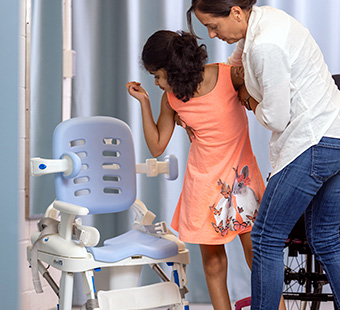
The Rifton Hygiene and Toileting System (HTS) provides customizable support to help children maintain effective toileting positions, promote autonomy while voiding, and reduce caregiver burden during transfers and physical assistance. The system’s supports configure to provide varying levels of pelvic, trunk, and lower extremity support while facilitating caregiver access for hygiene and transfers. This flexibility allows clinicians and families to adapt the support as a child’s needs change over time.
Supporting Long-term Toileting Success
It is important to remember that toileting is a multifactorial occupation that takes concentrated effort from both the child and caregiver to see achievements. For children with physical disabilities, achieving modified or full independence may require additional time, support, and focused intervention strategies.
Establishing proper positioning is a key component of successful toileting programs and can enhance the effectiveness of cognitive and behavioral strategies. Appropriate supports and strategies, both physically and cognitively, can improve overall participation, comfort, independence, and caregiver confidence in toileting.
References
- National Institute for Health and Care Excellence. Constipation in Children and Young People: Diagnosis and Management. NICE; 2010. Accessed June 18, 2026 https://www.nice.org.uk/guidance/cg99
- Lee DF, Ryan S, Polgar JM, Leibel G. Consumer-based approaches used in the development of an adaptive toileting system for children with positioning problems. Phys Occup Ther Pediatr. 2002;22(1):5-24.
- Morgan KE, Leroy SV, Corbett ST, Shepard JA. Complementary and Integrative Management of Pediatric Lower Urinary Tract Dysfunction Implemented within an Interprofessional Clinic.
Children (Basel). 2019 Jul 30;6(8):88.
doi: 10.3390/children6080088. - Noble E. Achieving Optimal Toilet Positioning for People with Disabilities. Rifton Equipment; 2023. Accessed June 18, 2026. https://www.rifton.com/-/media/files/rifton/white-papers/toilet-positioning-physical-disabilities.pdf
- Gunel MK, Mutlu A, Tarsuslu T, Livanelioglu A. Bladder and bowel control in children with cerebral palsy: case-control study. Croat Med J. 2006;47(2):264-270.
- Simon M, Wilkes-Gillan S, Chen YR, et al. Toilet training interventions for children with autism spectrum disorder: a systematic review. Res Autism Spectr Disord. 2022;99:102049.