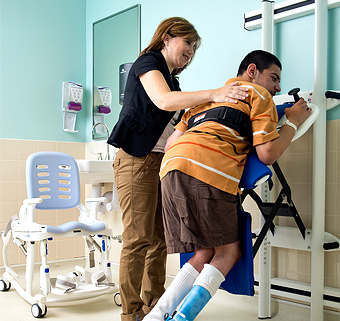

Vertical Changing Tables for Dignity and Convenience.
A special needs changing table that provides increased confidence and dignity
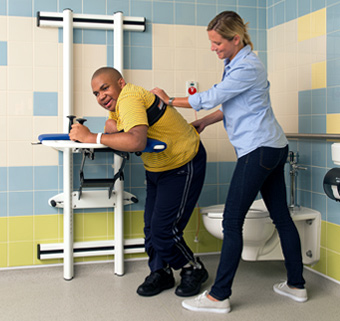
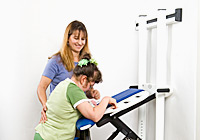
The Rifton Support Station brings new dignity, convenience and possibilities to hygiene care for people with disabilities. Unlike a traditional special needs changing table, the Support Station allows individuals to receive personal care in an upright, supported position. This thoughtful design can help replace the need for a traditional horizontal disabled changing table in many environments.
The Support Station’s unique features enable even partially weight-bearing individuals to receive hygiene care or a diaper change in an upright position. This vertical positioning improves access to clothing and skin while reducing physical strain for caregivers.
Download the Support Station brochure.
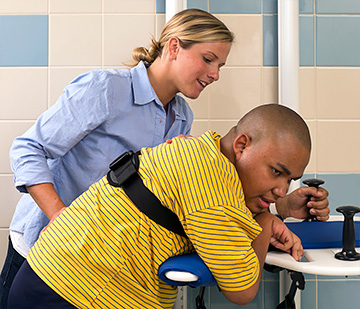
Benefits of Rifton's Special Needs Changing Station
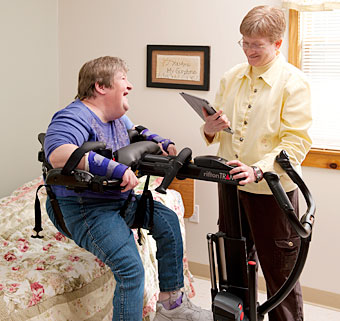
With the Support Station, clients assist in the sit-to-stand transfer using their own strength and skills to participate in their care. Over time, clients using this sit to stand toilet aid often improve their standing and toileting skills– paving the way for greater independence and better health.
In facilities around the country, the Support Station is making a dramatic difference for clients with disabilities and their caregivers.
See what a difference 90° can make:
- Greater dignity and independence: Moving away from infant-like, horizontal hygiene can have dramatic emotional benefits. Even people with very limited weight-bearing ability can now participate in their own personal care.
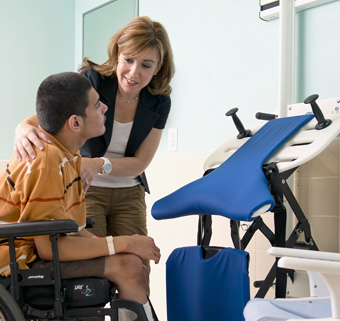
- Improved safety for caregivers: Eliminating transfers to a mat or horizontal special needs changing station reduces lifting and physical strain. Additionally, clothing and skin are more accessible, which can make hygiene care safer and more efficient.
- Practice in strength and skill building: By using their own strength and skills to transfer and support themselves, users can improve weight-bearing and motor skills over time.
- Less time out: With a standing changing table, hygiene care can often be completed faster than when using a horizontal changing surface. The Support Station lets everyone spend less time on hygiene and more time in class, in therapy or simply enjoying life.
Support Station Features
An innovation in toileting and hygiene care, the Support Station enables toilet transfers for people with physical disabilities.
Developed in consultation with therapists, Rifton’s Support Station allows clients to assist in their own personal hygiene – providing them with greater dignity and independence. At the same time, this vertical changing table reduces the risk of staff injury by eliminating heavy lifting and difficult transfers.
Install the Support Station to use with a rolling commode or as a transfer aid to a stationary toilet.
- 1 Adjustable height and tilt
- 2 Easy to clean
- 3 Folds for storage
- 4 Non-weight-bearing transfers
- 5 Pivot or fixed configurations
- 6 Self-assisted transfers
- 7 Upright positioning
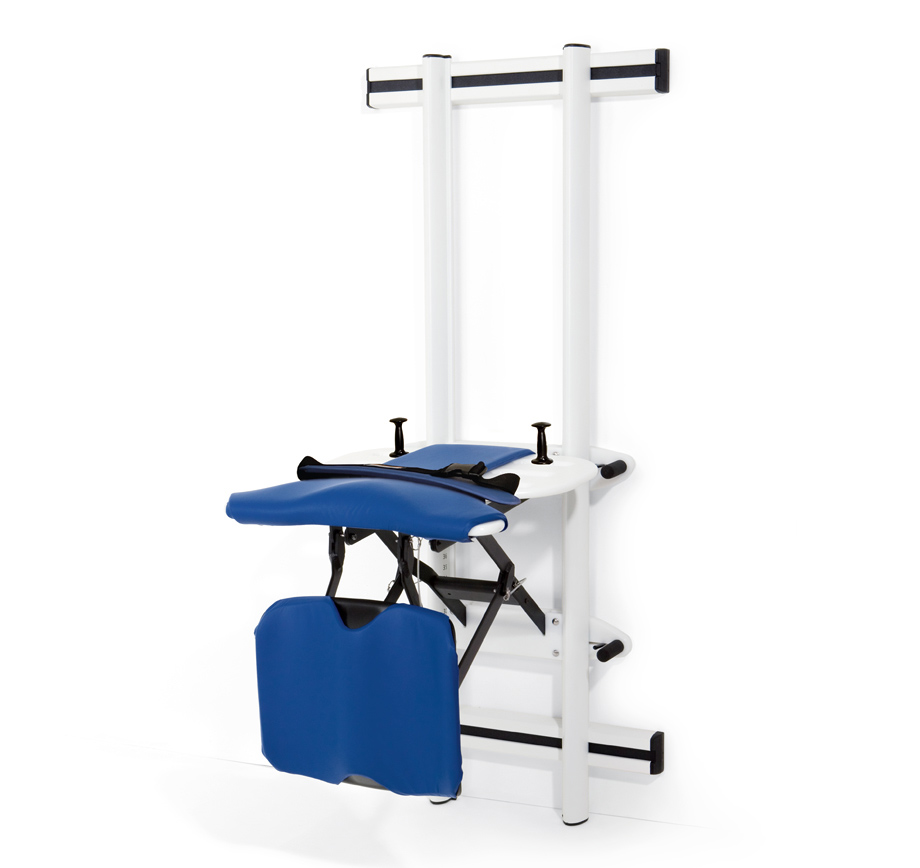
Components
Use the slides below to learn more about the components of the Support Station.
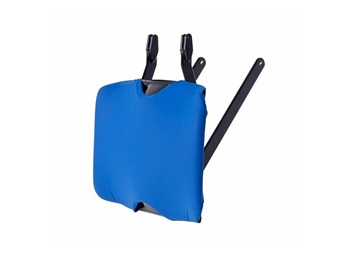
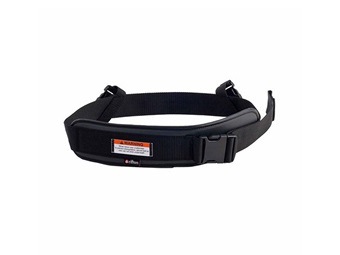
Sizes & Dimensions
Use this dimension chart to help determine if the Support Station is the right choice for your client.
Important: User’s height and weight must be within capacity limits. Weight capacity 250lbs and height adjustable for clients between 46 and 80 inches.

Check the user’s overall height to see if the Support Station will fit your client.
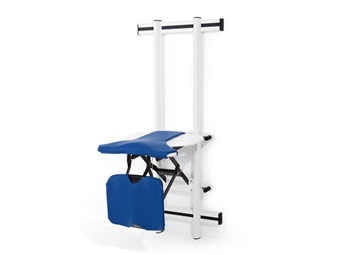
| Item Dimensions (inches) | K710 Support Station |
|---|---|
| User’s overall height |
46 – 80 (117 – 203 cm) |
| Trunk board size |
24 x 24 |
| Maximum trunk board height |
45 |
| Minimum trunk board height |
26 |
| Frame height |
65½ |
| Frame width |
27½ |
| Depth when trunk board horizontal |
31 |
| Depth when collapsed against wall |
8 |
| Maximum working load (lb) |
250 |
Note regarding configuration: Adding a kneeboard determines a pivot or fixed configuration. When installed without a kneeboard, the Support Station can pivot to aid transfers. With the kneeboard in place, the client will remain in an upright, forward leaning position. The decision between fixed or pivot configuration should be made after determining the installation location.
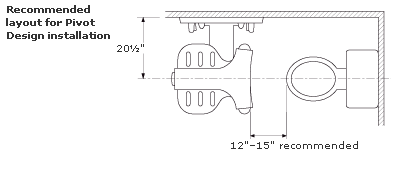 |
See the Product Manual for more information about components and installation instructions..
Product Resources
Learn more about the Support Station using the resources below.

Downloads