


Developmental Planning is the process of using developmental milestones as a general basis for planning care and predicting needs for a child within the early intervention care model. The developmental care plan considers the time frames associated with normal developmental sequence relative to orthopedic, motor, sensory, speech, cognitive and psychosocial development. It uses those milestones to predict needs for therapeutic intervention, modalities and adaptive devices.
The loose application of the developmental plan process helps the clinical team adequately prepare for anticipated needs. This includes considering the time needed for the assessment for, education about and procurement of those interventions, modalities and devices.
In the EI setting we are forced to intervene in immediate concerns, and to look down the road to anticipate future needs. Looking ahead is a daunting task. There are so many factors to consider, and approaches that could be employed.
Using a "Developmental Planning" mindset employs a pragmatic thought process whereby the professional considers alternative methods for accomplishing milestones. This approach utilizes alternative means whenever possible, as opposed to alternative time frames.
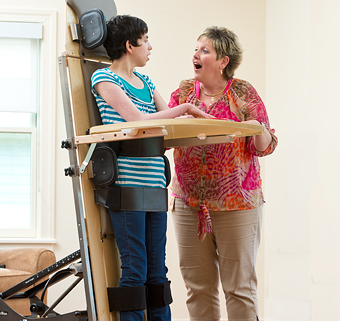
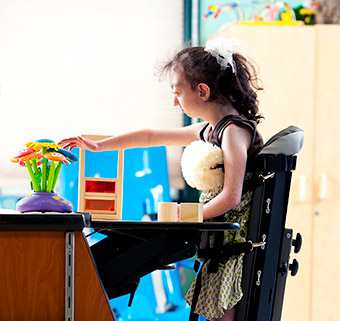
Of course children in the EI setting consistently achieve goals later than the normal developing child. The goal of using the "Developmental Planning" mindset is to have the alternate intervention at hand when that milestone would normally have been reached. The rationale for this level of intervention is to preserve the benefit to the child of achieving that milestone even if it is in a limited or adapted fashion. The child may only be able to mimic the milestone, yielding a worthwhile portion of the scope of value found in accomplishing this task, say perhaps only the orthopedic development and visual orientation that would be gained with adapted standing.
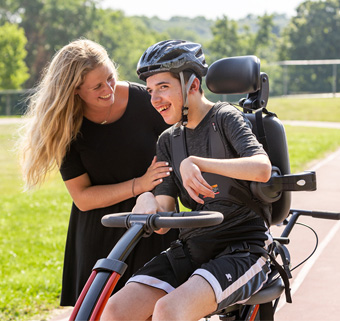
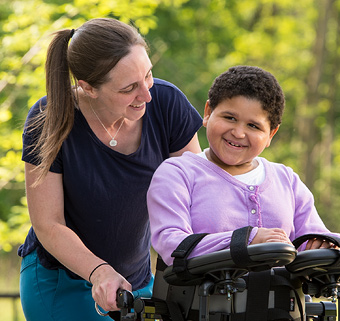
Setting goals with loose reference to normal development so that some benefit can be derived from their timely accomplishment requires planning. Adapted interventions in the child?s environment can facilitate accomplishment of the developmental skill you are trying to achieve. These alternate interventions are not to be viewed as substitutive measures. Rather, implementation of the alternate intervention enables the desired developmental goal. This approach allows for greater function and participation for the child in the natural environment.
"Developmental Planning" requires thinking ahead. If you look at the calendar and determine that the child is now 10 months and is not sitting independently you will inevitably be delayed in accomplishing even a modified version of this goal due to the time it may take to implement an alternate strategy. You are not formulating goals or expectations that the child will achieve the full milestone within the normal developing timeframe. Rather your anticipation of a delay, prompts you to have an alternative solution at hand when you need the child to start working on that goal.
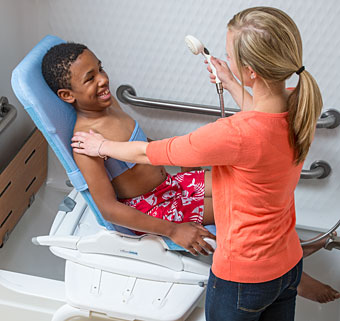
Preparing a family for the ideas of adaptive seating, a stander, or other adaptive equipment can often be a major undertaking. Gradually working-in ideas about the developmental sequence as they relate to a child?s postural insufficiency, and then showing how the child may look in a high chair with rolled kitchen towels can be a more innocuous way to introduce the concept of adapted equipment. This approach takes time and patience. Additionally, procurement of devices that are funded by traditional medical insurance can take 3-6 precious months. Acquiring loaner resources or demo/trial equipment may take several weeks if there is a waiting list. Consideration of these time frames as well as time needed for introduction and parent education is essential to meeting developmental planning goals.
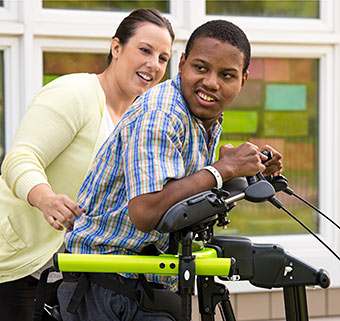
So what does this mean in practice? A seating system assessment would occur as early as 6-7 months of age for a child that may have a need for an adapted or alternative solution for sitting, if it is anticipated that they may not achieve that goal at 10-12 months of age. To gain the orthopedic benefits of a stander on developing hips, and to reap the spatial awareness, kinesthetic and visual field orientation that can be achieved while in a supported, modified standing position, you may choose to start assessing for standing as early as 10-11 months. In this way, the appropriate equipment will be at hand when you have the need for the device. If that seems too early to introduce those elements, remember that you want to have the tools you need when you need them. It is never too early to plan.
Using the "Developmental Planning" model to organize your thoughts, prepare your families, and accomplish the goals you set for clients is one of many effective approaches and tools that can help you maximize your effectiveness in the EI setting.
Jim lives in Girard, PA with his wife Janet, MPT, his daughter Sylvia, who attends Edinboro University and son, Jordie who is 12 years old. Jim and Janet travel on missionary and private trips to help disabled and disadvantaged people living in and around Santa Barbara, Honduras and the Dominican Republic. Contact the author at jnoland@pirt.us.